Modern interior and architectural design is evolving rapidly, with designers and architects constantly searching for solutions that combine aesthetics, functionality, durability, and openness. One of the biggest trends in commercial and residential interiors today is the growing use of decorative wire mesh panels as an alternative to traditional partition systems.
From luxury hotels and restaurants to offices, retail stores, and modern homes, mesh partition systems are transforming how spaces are divided while maintaining openness and visual appeal.
But how do decorative wire mesh partitions compare with traditional partitions like wood, glass, gypsum, or solid walls? Let’s explore which option is better for modern spaces.
What are Decorative Wire Mesh Panels?
Decorative wire mesh panels are architectural metal mesh systems designed for interior and exterior applications. These panels are commonly manufactured using stainless steel, aluminum, brass, or copper and are widely used for:
- Space dividers
- Ceiling features
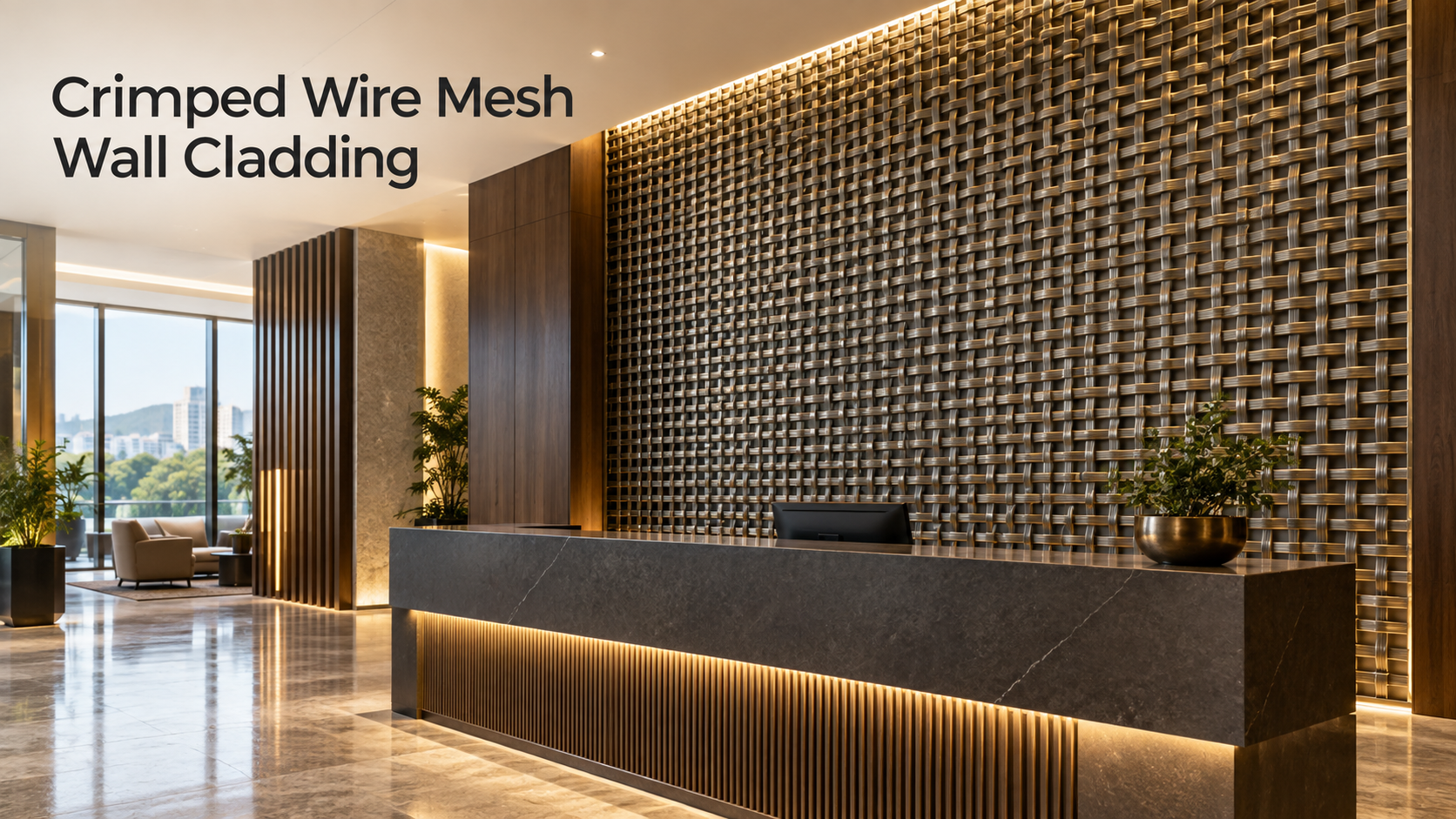
- Wall cladding
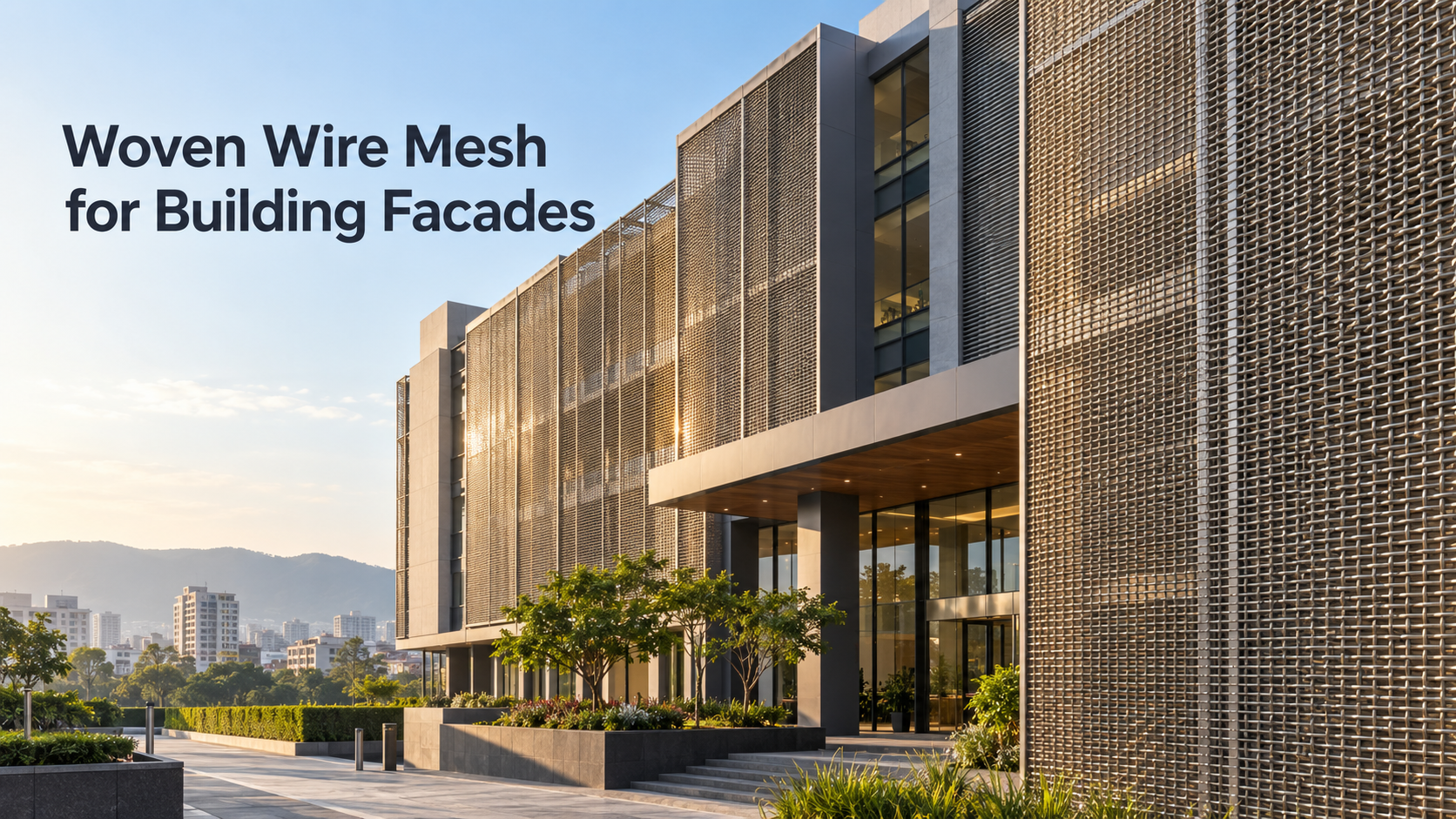
- Facades
- Railings
- Decorative partitions
Unlike solid walls, mesh partitions create separation while allowing airflow, visibility, and light transmission.
What are Traditional Partitions?
Traditional partitions include:
- Wooden partitions
- Glass partitions
- Gypsum board walls
- MDF panels
- Concrete dividers
These systems are commonly used to create enclosed rooms or fixed divisions within a space.
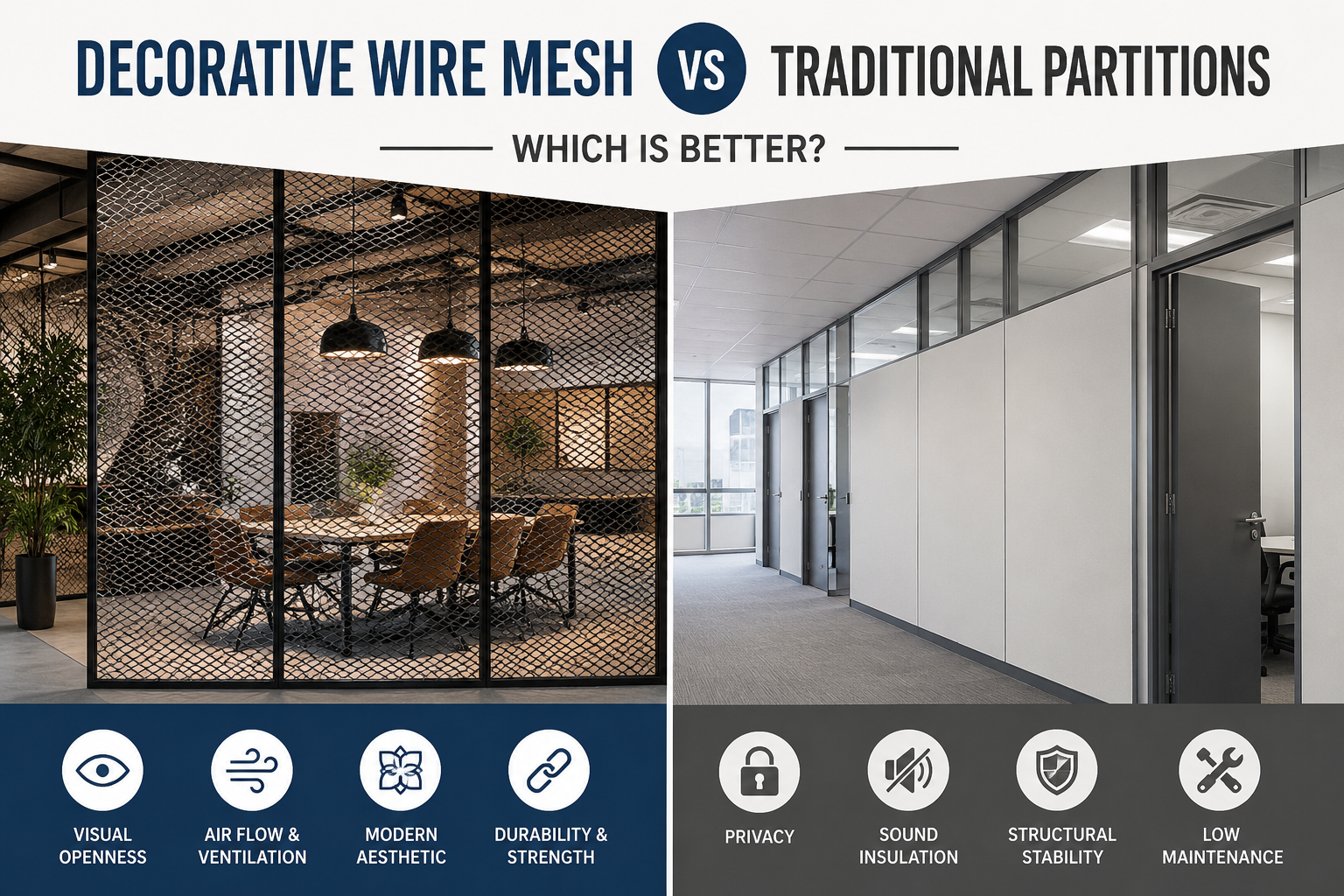
Decorative Wire Mesh vs Traditional Partitions
1. Aesthetic Appeal
One of the biggest advantages of decorative wire mesh panels is their modern and luxurious appearance.
Wire mesh creates:
- Elegant textures
- Premium metallic finishes
- Sophisticated architectural detailing
- Contemporary design aesthetics
Traditional partitions often appear bulky and can visually reduce the openness of a space.
Winner:
Decorative wire mesh panels
2. Light and Openness
Unlike solid partitions, mesh partition systems allow natural light and airflow to pass through while still defining spaces.
This creates:
- Brighter interiors
- Better ventilation
- Open-space feel
- Modern architectural aesthetics
Traditional walls can block light and make spaces feel smaller or enclosed.
Winner:
Mesh partition systems
3. Space Optimization
Decorative wire mesh is ideal for modern commercial interiors where maintaining openness is important.
Applications include:
- Restaurants
- Hotels
- Office spaces
- Retail stores
- Luxury residences
Traditional partitions consume visual space and may reduce design flexibility.
Winner:
Decorative wire mesh panels
4. Durability and Maintenance
High-quality stainless steel decorative mesh offers:
- Corrosion resistance
- Long lifespan
- Minimal maintenance
- Excellent structural strength
Wooden partitions may suffer from:
- Moisture damage
- Termites
- Warping
- Frequent maintenance
Glass partitions require regular cleaning and are more fragile.
Winner:
Decorative metal mesh
5. Design Flexibility
Decorative mesh systems are available in:
- Various weave patterns
- Custom finishes
- Multiple colors
- Different transparency levels
- Flexible installation designs
Architects can create unique and customized interiors using woven wire mesh solutions.
Traditional partitions offer comparatively limited design flexibility.
Winner:
Decorative wire mesh panels
6. Privacy Requirements
Traditional partitions provide complete visual privacy, making them suitable for:
- Meeting rooms
- Cabins
- Enclosed offices
- Bedrooms
Mesh partitions offer semi-open privacy instead of full enclosure.
Winner:
Traditional partitions (for complete privacy)
Best Applications for Decorative Wire Mesh Panels
Commercial Interiors
Perfect for offices, restaurants, hotels, and retail spaces.
Luxury Residential Spaces
Used for stair partitions, room dividers, balcony screens, and feature walls.
Hospitality Design
Widely used in modern hotels and fine dining interiors for premium aesthetics.
Architectural Projects
Ideal for facades, ceilings, and decorative cladding systems.
Why Mesh Partition Systems are Trending
Architects and interior designers increasingly prefer mesh partition systems because they:
- Create modern visual appeal
- Improve spatial openness
- Enhance lighting
- Add architectural texture
- Offer durable long-term performance
This makes decorative wire mesh one of the most versatile materials in contemporary design.
Conclusion
Both decorative wire mesh and traditional partitions serve different purposes, but for modern architectural aesthetics, flexibility, openness, and durability, decorative wire mesh panels offer significant advantages.
If you want to create stylish, functional, and visually open interiors, mesh partition systems are an excellent choice for residential, hospitality, retail, and commercial projects.