Introduction
Modern architecture demands materials that strike a balance between aesthetics, performance, and practicality. One such material gaining widespread popularity among architects, structural consultants, and builders is crimped wire facade mesh. Whether you’re designing a commercial tower, a parking structure, or a high-end residential complex, crimped wire facade mesh offers a compelling combination of visual elegance and functional efficiency.
In this complete guide, we break down everything you need to know about crimped wire facade mesh — what it is, how it is made, its key benefits, typical applications, and how to choose the right specification for your project.
What Is Crimped Wire Facade Mesh?
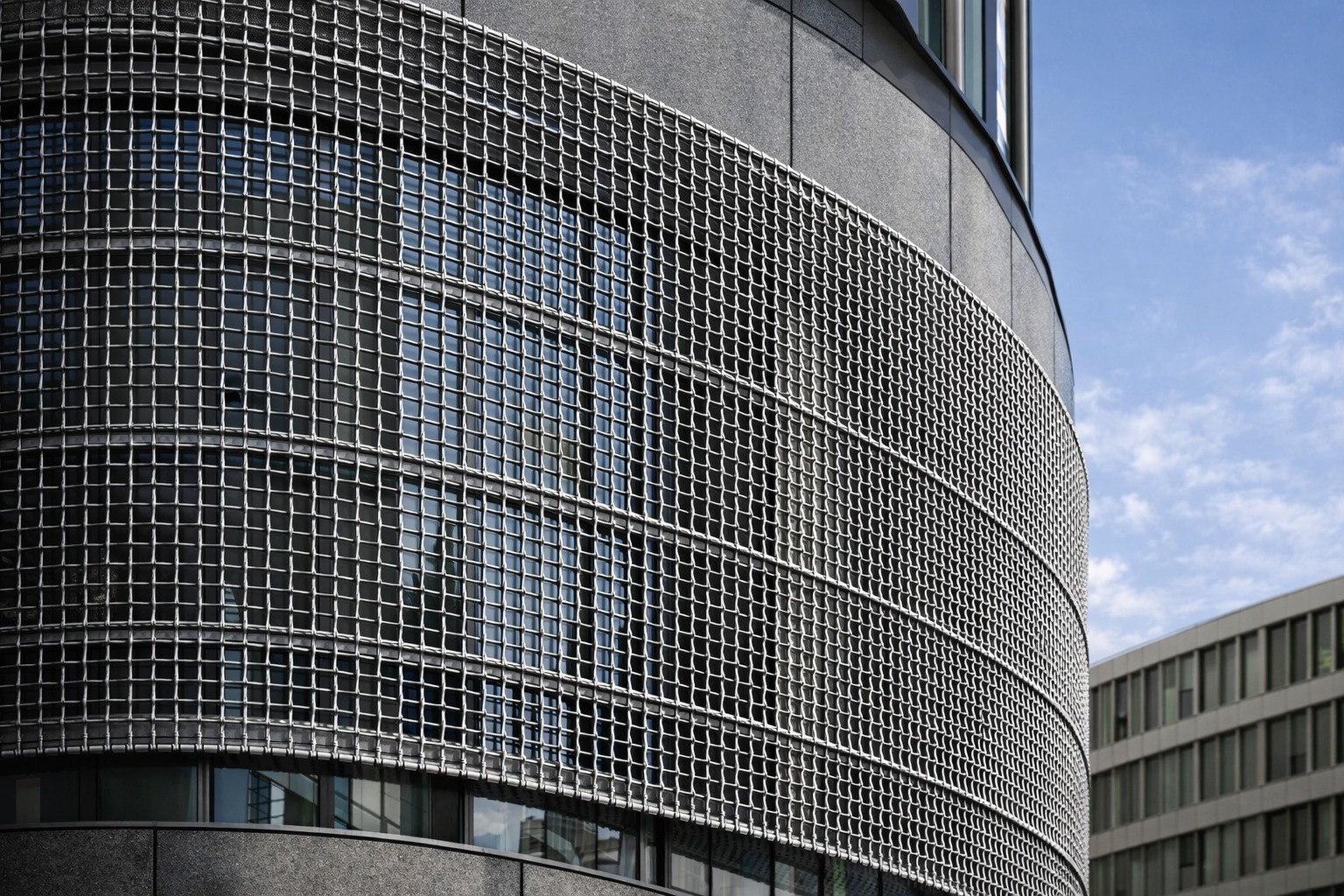
Crimped wire facade mesh is a type of woven metal mesh panel in which the wires are pre-crimped (shaped with regular bends or waves) before being interlocked to form a stable, open-structured sheet. Unlike plain-woven or expanded metal meshes, the crimping process locks each wire at its intersection points — creating a rigid, dimensionally stable panel without the need for welding or additional fasteners.
These mesh panels are engineered specifically for architectural applications such as:
- External building facades and cladding
- Sun-shade and ventilated screen systems
- Balcony railings and safety screens
- Interior decorative walls and partitions
The term “facade mesh” refers to the mesh’s primary use case — serving as the outermost skin or cladding layer of a building, exposed to weather, UV radiation, and structural loads.
How Is Crimped Wire Facade Mesh Made?
The manufacturing process begins with high-quality metal wire — typically stainless steel (Grade 304 or 316), aluminium, brass, or copper-alloy wires, depending on the application. Here’s a step-by-step overview:
- Wire Selection: Base metal wire is chosen based on tensile strength, corrosion resistance, and aesthetic requirements. For exterior facade applications, Grade 304 stainless steel is the most common choice due to its rust resistance and durability.
- Crimping: Each wire strand is passed through precision crimping rollers that imprint uniform waves or bends along its length. The crimp profile — its pitch, height, and angle — determines the mesh opening size, rigidity, and surface texture.
- Weaving: Crimped wires are woven together using industrial looms, with warp wires (running lengthwise) and weft wires (running crosswise) interlocking at each crimp. The crimped bends act as mechanical locks at every intersection.
- Cutting and Finishing: The woven mesh is cut to specification and finished as required — natural metal, brushed, polished, or powder-coated — before being formed into panels suitable for installation.
This process results in a flat, self-supporting mesh panel with a precise open area percentage, wire diameter, and mesh count — all of which influence the panel’s performance and appearance.
Benefits of Crimped Wire Facade Mesh for Buildings
1. Exceptional Durability and Weather Resistance
Stainless steel and aluminium crimped wire mesh panels resist corrosion, oxidation, UV degradation, and environmental wear — making them ideal for long-term outdoor facade applications in Indian climatic conditions, including coastal, tropical, and high-humidity zones.
2. Ventilation and Natural Light
With open area percentages typically ranging from 40% to 65%, crimped wire facade mesh allows natural airflow and daylight to penetrate the building envelope. This reduces dependence on mechanical ventilation and artificial lighting, directly contributing to lower energy consumption.
3. Solar Shading and Heat Control
When used as a second-skin facade or solar screening system, wire mesh panels intercept direct sunlight before it reaches the primary building envelope. This passive shading reduces solar heat gain, improving indoor thermal comfort and reducing air conditioning loads.
4. Lightweight Construction
Crimped wire mesh panels are significantly lighter than conventional stone, composite, or concrete cladding systems. This reduces the dead load on the building structure, simplifying engineering calculations and potentially reducing structural costs.
5. Modern Aesthetic Appeal
The woven geometry of crimped wire mesh creates a visually layered, dynamic facade surface that changes appearance with shifting light and viewing angles. The natural metallic finishes — from the cool tones of stainless steel to the warm glow of brass and copper — give buildings a contemporary identity that stands out.
6. Low Maintenance and Long Service Life
Unlike painted or coated panels that chip, fade, or require periodic repainting, stainless steel mesh requires minimal upkeep. Periodic washing to remove surface dust is typically sufficient to maintain appearance over decades.
7. Flexible Customisation
Mesh panels can be fabricated to custom dimensions, and installation systems — including tensioned cable frames, perimeter-clamped infill panels, and curtain-style hanging systems — give architects and builders extensive design flexibility.
Common Applications in Architecture and Construction
Building Facades and External Cladding
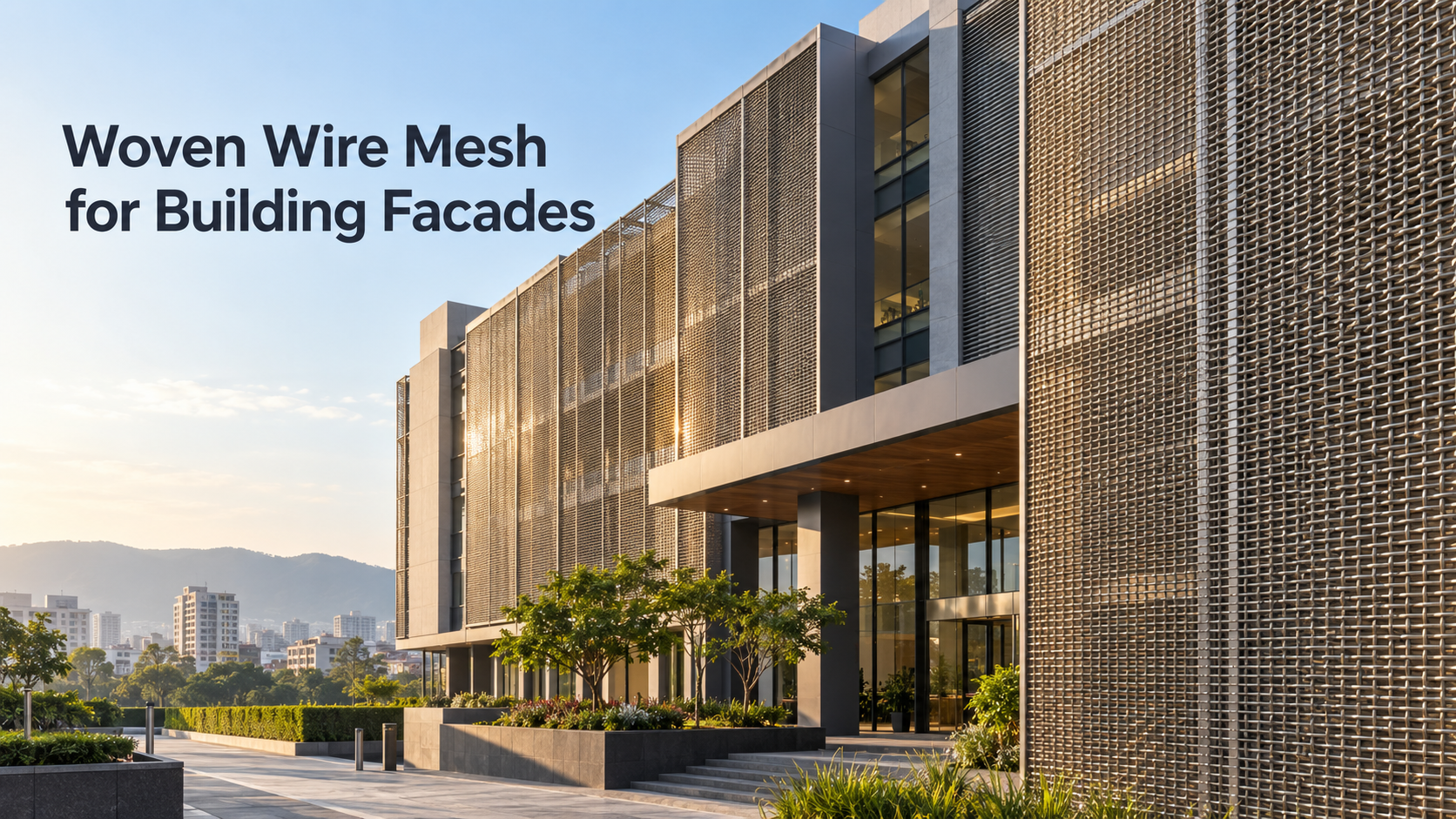
The most prominent use of crimped wire facade mesh is as an external cladding layer on commercial buildings, offices, hotels, and institutional structures. Architects specify mesh facades to create visually distinctive exteriors while delivering practical performance benefits like solar control and airflow.
Parking Garages and Multi-Level Car Parks
Parking structures are ideal candidates for wire mesh cladding. The high open area of the mesh ensures adequate natural ventilation — a requirement under NBC (National Building Code) guidelines for open car parks — while providing a clean, modern appearance and preventing unauthorized access.
Balcony Railings and Safety Screens
Crimped wire mesh panels serve as durable, corrosion-resistant balcony infill panels. They offer the required structural rigidity to meet safety standards while maintaining visual openness and transparency.
Interior Feature Walls and Partitions
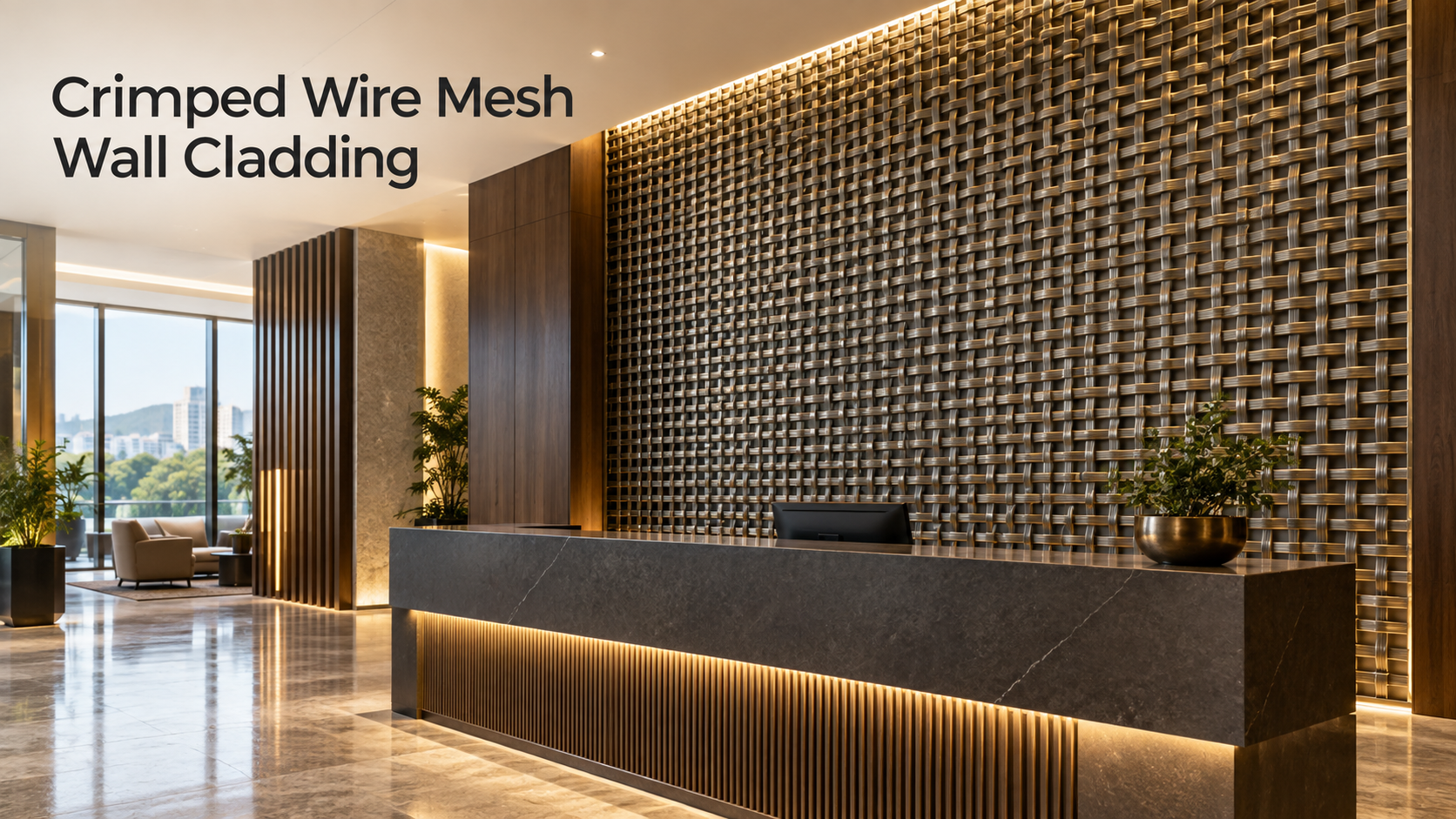
Inside commercial spaces, lobbies, retail outlets, and hospitality environments, wire mesh panels are used as decorative feature walls, ceiling panels, and space dividers. Multi-material mesh panels — combining stainless steel with brass or copper wire — create rich, textured surfaces that elevate interior design.
Sun-Shade Screens and Ventilated Cladding Systems
In double-skin and ventilated facade systems, crimped wire mesh acts as the outer screen layer. This setup creates an air cavity between the mesh and the inner wall, which drives convective airflow and reduces heat transfer into the building — a strategy increasingly favoured in sustainable architecture in India.
Choosing the Right Crimped Wire Facade Mesh
Selecting the correct mesh specification requires evaluating several factors:
1. Environmental Exposure For coastal or industrial environments, Grade 316 stainless steel offers superior corrosion resistance compared to Grade 304.
2. Required Open Area Higher open area (60%+) maximises ventilation and light transmission. Lower open area increases privacy and reduces wind load on the panel.
3. Visual Effect Multi-material meshes (stainless steel + brass + copper) create warm, layered tones. Pure stainless steel delivers a cleaner, more industrial aesthetic.
4. Panel Size and Installation System Large-format panels need heavier wire diameters and robust framing systems. Tensioned systems suit tall, vertical runs; infill panel systems suit modular facade grids.
5. Regulatory Compliance For facades in India, ensure the selected mesh and installation system comply with applicable sections of the National Building Code of India (NBC 2016) and fire safety requirements.
Why Architects and Builders in India Are Choosing Crimped Wire Facade Mesh
The construction industry in India is witnessing a growing shift toward facade systems that deliver performance alongside design quality. Crimped wire facade mesh fits squarely into this trend for several reasons:
- It supports green building ratings (IGBC, GRIHA) by contributing to passive ventilation and solar control strategies.
- It offers a cost-effective alternative to high-end stone or composite cladding, with lower installation complexity and longer service life.
- It is well-suited to India’s tropical climate, where solar heat gain control is a primary design challenge.
- It enables architects to create landmark facades that respond to local light conditions, since the woven metallic surface interacts dynamically with India’s intense natural light.
Suppliers such as Zain Corporation (decorativemesh.in) offer a range of crimped wire mesh products, including the ADM9 series, which combines stainless steel, brass, and copper wire in a single woven panel for a multi-tonal, visually rich finish — suitable for both exterior facades and interior architectural applications.
Frequently Asked Questions
Q: What is the difference between crimped wire mesh and expanded metal mesh? Expanded metal mesh is produced by slitting and stretching a solid metal sheet, creating a diamond-shaped open pattern. Crimped wire mesh is woven from individual pre-formed wire strands. Woven mesh offers a more refined, textile-like surface, while expanded mesh has a more industrial character.
Q: Can crimped wire facade mesh be used in coastal locations? Yes, with the correct material specification. Grade 316 stainless steel or marine-grade aluminium should be specified for coastal environments where chloride-induced corrosion is a risk.
Q: How is crimped wire mesh installed on a building facade? Installation methods include tensioned cable-framed systems, perimeter-clamped infill panels, and hanging curtain-style systems. The choice depends on panel size, building height, and wind load requirements.
Q: What maintenance does crimped wire facade mesh require? Stainless steel and aluminium mesh panels require minimal maintenance. Periodic washing with water and mild detergent is sufficient to maintain appearance. Avoid abrasive cleaning products that could scratch polished finishes.
Q: Is crimped wire facade mesh suitable for fire-rated applications? Metal mesh panels are inherently non-combustible. However, fire rating of the overall facade system depends on the complete assembly — including framing, fixings, and any backing materials. Always verify compliance with relevant fire safety standards for the specific project.
Conclusion
Crimped wire facade mesh represents one of the most versatile and architecturally expressive cladding materials available to builders and designers today. Its combination of structural performance, climatic adaptability, low maintenance requirements, and distinctive aesthetic makes it a compelling choice for a wide range of building types — from commercial towers to residential complexes and parking structures.
For architects and builders in India looking to specify facade mesh for their next project, understanding the key parameters — wire diameter, mesh count, open area, material, and installation system — is the foundation for making the right product selection.
Zain Corporation is a leading supplier of crimped wire facade mesh panels and decorative architectural mesh in India. Explore the ADM9 Crimped Wire Facade Mesh at decorativemesh.in.